Adding Semantics to Selected Objects |


|
|
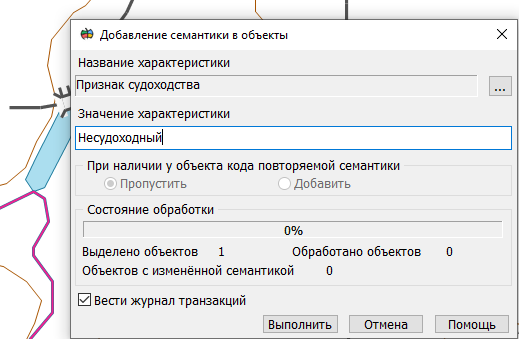
1. Using the map object search/selection dialog, define the list of map objects to be processed and click the Select button. 2. Activate the add semantics mode by pressing the corresponding button on the Semantics auxiliary panel of the Map Editor. 3. Set the name and value of the characteristic to be added. Keep in mind that semantic characteristics can be repeatable or non-repeatable. If you select a semantic characteristic for which a single object can have multiple values (e.g., vegetation type: birch, oak), you should specify what the program should do when it encounters the added characteristic in the object being edited (skip or add another value). 4. Click the Execute button.
All selected objects will be processed, even if they are selected from multiple maps.
Character String Value Assembly A character string value can be assembled taking into account the values of other object semantics. For this purpose, the character string must be formatted as follows: after the characters %#, the semantic code (number) is specified, followed by the default value in [ ], which is output to the string if the object does not have this semantics.
No more than 16 insertions are considered. The rest of the text can be in any form.
Example:
Input string: "house No. %#45[none] condition %#3[not filled] (%#47[])"
Three semantic values of the object will be considered: Semantic 45 – HOUSE NUMBER (character), Semantic 3 – CONDITION (classifier type), Semantic 47 – FUNCTIONAL PURPOSE (character).
The values of numeric semantics are formatted according to the rules specified for the given semantics in the classifier.
The final result based on semantic values for a specific object may be: "house No. 5 condition not filled ( )" "house No. 7-a condition RESIDENTIAL (pharmacy)" "house No. none condition not filled ( )"
|
 To add semantic characteristic values to all selected objects: